0
Your Cart is Empty

Mount Nun Expedition

  • The Caucasus Mountains are a mountain range at the intersection of Asia and Europe

Overview

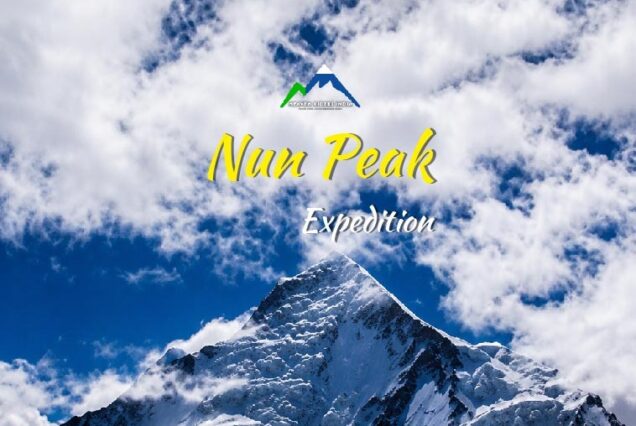
Mount Nun is the highest peak of Zanskar range in Ladakh. Mount Nun Expedition is for experienced mountaineers only aspiring for Mount Everest & other 8000M+ peaks. Demanding glacial formations, heavy icefalls, thoroughly crevassed surfaces, vertical ice walls, and unpredictable weather conditions make it more challenging.
The Nun Kun massif is separated by short plateau of about 4 km in length. Mt. Nun 7,135 m (23,409ft) and its neighbor peak Mt. Kun 7,077m (23,218ft) has separate traditional routes. After unsuccessful attempts to climb the mountain in 1934, 1937, and 1946 the first ascent of Nun was in 1953 by French mountaineers Mrs. Claude Kogan and Mr. Pierre Vittoz, a Swiss missionary residing in Leh Ladakh.
Mt. Nun expedition is perfect for those mountaineers who have already done 6000 M+ peaks.
Due to the extreme & unpredictable weather and rough terrain demands aspirants to be physically fit with high mental endurance. It is mandatory that you have enough experience in mountain climbing before planning for Mt Nun Expedition. Prior knowledge of mountaineering techniques like roping up procedures, using ice axe in front point climb, climbing with ascender-descender, carabineers, snow stakes or anchors, crampons, fixed roping, and jumar climbing is mandatory.

How to Reach for Mount Nun Expedition

The stunning valleys, the magnificent mountains and the breathtaking views of the landscape call every traveler to explore Ladakh. Ladakh is one of the most scenic places to visit in India and presumably on top. It has an airport and is connected by road to major places like Mumbai, Delhi, Kolkata, Bangalore, Hyderabad, Chandigarh and Srinagar. Leh is situated at an altitude of 3524 meters. In fact. Highways leading to Leh are open only between May and October and covered in snow for the remaining months. Leh’s easy accessibility by air led to growth of tourism over the years. There are two ways to reach Leh: by road via Manali (Himachal Pradesh) or Srinagar (Kashmir) and by air with a flight to Kushok Bakula Rimpoche airport located just 4 km from Leh city center.

Nearest Airport: Leh has its own airport, which is well connected with other important places in India. Regular flights link Leh with Delhi, Jammu and Srinagar. The checking is a bit strict on Leh airport being a military airport. From airport, local cabs can be hired to reach anywhere in Leh.

Nearest Railway Station: There is no close rail-head available close to Leh. The nearest railway station is Jammu Tawi (700 km from Ladakh). You can hire a cab to reach Ladakh from there. The nearest broad-gauge rail-heads are at Kiratpur Sahib 268 km, Kalka 275 km, Chandigarh 310 km.

By Road: Leh is located 434 km from Srinagar and 494 km from Manali. You can hire a cab to reach Leh. Manali-Leh road is well known to the world. The highways are shut due to heavy snowfalls during the winter months. So, you can only travel to Ladakh by road between May to September.
Documents Required for Mount Nun Expedition

– Valid Govt. ID (any of Aadhar Card/Passport)
– Mandatory Insurance (min. 10 lakh), Passport Size Photo
– Medical Certificate by registered medical practitioner min MBBS
– Previous Experience up to 6000m like Mt. Deo TibbaBlack Peak, Mentok kangri, Bhagirathi Peak, Gangotri Peak, Kang Yatse 2 or equivalent.

– Basic Mountaineering Course or Advance Mountaineering Course is mandatory.

For Any Enquiry +91 73800 87934.

Highlights

  • Region: Ladakh
  • Route: via East-Face
  • Total Duration: 21 Days
  • Altitude: 7,135 m | 23,409ft
  • Grade: Semi-Technical/Challenging
  • Best Time: July-Aug-Sept
  • Trip Begin: Leh.
  • Trip End: Leh.

Tour Plan

Day 01 Arrive Leh Alt. 3524 m
Day 02 Leh
Day 03 Leh - Kargil Alt. 2676 m
Day 04 Kargil to Tangol Alt. 3700 m
Day 05 Tangol to Base Camp Alt. 4600
Day 06 Acclimatize day and load ferry
Day 07-17 BC to ABC, C1, C2, Summit & back to Tangol.
Day 18 Tangol to Leh
Day 19 Departure Day

Included/Excluded

  • Fees & Permit - IMF permit & fees for Indian nationals
  • Camping permit & fees
  • Accommodation
  • 3 Nights Guest House stay in Leh
  • Kargil Hotel/Home Stay
  • Rest all days in camps during expedition
  • Meals
  • Breakfast during Leh & Kargil Stay
  • Transportation: Leh to Kargil to Tangol and back to Leh
  • Expert Lead Guide
  • Mountain Staff: Cook, Helper, Porters, & other support staff
  • High Altitude Camping Equipment: Tents, Sleeping Bags, Mattress, Kitchen Utensils, etc as required
  • All meals up to and high camps
  • Mountain Medical Kit with portable oxygen cylinder
  • Technical equipment: Ropes, Sling, Helmet, Ice Axe, Harness, Jumar, Pitons, Crampons, Mountaineering Boots, Carabiners, Descender, Jumar, Anchors, Shovels.
  • Portage of all the equipment/ supplies to & from Base Camp.
  • Fullpower Fun
  • Any services not mentioned in the inclusions
  • Any insurance, emergency evacuation or rescue charges, any cost of hospitalization.
  • Any change in itinerary, cost arises due to road blockage, natural calamity, sudden halt or any cost beyond our control to be borne by climber/you
  • Expenses personal in nature like mountain tips, mineral water, drinks, snacks/meals, refreshments not mentioned in the inclusions
  • Personal equipment porterage/off-loading; trekking gear, clothes, sleeping bag, climbing gear, climbing shoes, personal medical kit etc. Available on Extra cost, ask while bookings.
  • Insurance or liability for injury, death, accidents, or loss of property.
  • IMF Peak Booking Fee for foreign nationals (roughly USD 500 per person), and Mandatory Liaison Officer Fee for foreign expeditions (USD 500) as per IMF.
  • Taxes
Things to Carry

Headwear & Accessories

  • Woolen Cap – 1
  • Sun Cap / Hat – 1
  • Gloves – 1 pair
  • Socks – 3 pairs
  • Woolen Socks – 1 pair
  • UV Protected Sunglasses – 1 (Mandatory)

Read More

Headwear & Accessories

  • Woolen Cap – 1
  • Sun Cap / Hat – 1
  • Gloves – 1 pair
  • Socks – 3 pairs
  • Woolen Socks – 1 pair
  • UV Protected Sunglasses – 1 (Mandatory)

Read More

Clothing (Upper Body)

  • Wind & Waterproof Jacket – 1
  • Fleece Jacket – 1
  • Jacket – 1
  • Collared Full Sleeve T-Shirt – 2
  • Neck Warmer – 1

Read More

Bottom Wear

  • Trekking Pant – 2

Read More

Footwear

  • Waterproof Trekking Shoes with good grip

Read More

Food & Hydration

  • Dry Ration (ORS, Dry Fruits, Chocolates, Protein Bars, etc.)

Read More

Medical Essentials

  • Personal Medicines (as per medical advice)
  • Inhalers (for asthma sufferers)

Read More

Personal Toiletries

  • Toothpaste
  • Toothbrush
  • Face Wash
  • Hand Sanitizer
  • Cold Cream
  • Sunscreen Lotion
  • Lip Balm / Lip Guard
  • Quick Dry Towel
  • Toilet Paper

Read More

Equipment & Essentials

  • Head Lamp – 1 (Mandatory)
  • Four extra pairs of batteries
  • Power Bank (for mobile & camera)
  • Water Bottle – 2 (Mandatory)

Read More

Bags & Storage

  • Rucksack (40 Ltrs) with rain cover
  • Daypack (20 Ltrs) with rain cover

Read More

Rain Protection

  • Poncho / Rain Suit – 1 (Mandatory)

Read More

Mandatory Documents

Original & Copy of Valid Govt. Id (any of Passport/Aadhaar Card)

Medical Certificate from registered Medical Practitioner (Minimum MBBS)

Passport size photograph – Valid passport and visa required for Foreign

Health & Fitness

Trekking demands strong cardiovascular endurance, leg power, core stability, and overall stamina to handle long hours on steep, uneven, and rocky terrain. Depending on the difficulty level, trekkers should ideally be capable of jogging 4–7 km in 20–40 minutes.

Preparing your body in advance significantly enhances safety, performance, and enjoyment during the trek.

Core Physical Fitness Requirements

1. Cardiovascular Endurance

Strong heart and lung capacity are essential, especially for high-altitude treks where oxygen levels are lower.

Training Goal:

  • 30–60 minutes of cardio
  • 4–5 days per week
  • Activities: Jogging, running, brisk walking, swimming, or cycling

2. Leg Strength

Powerful legs are crucial for ascending steep slopes and descending uneven, rocky paths.

Focus Exercises:

  • Squats
  • Lunges
  • Step-ups
  • Calf raises

3. Core & Upper Body Strength

A strong core and upper body help you carry a backpack comfortably for extended hours.

Recommended Exercises:

  • Planks
  • Push-ups
  • Overhead presses
  • Back extensions

4. Flexibility & Stamina

Flexibility reduces muscle stiffness, prevents injury, and improves endurance.

Include:

  • Yoga
  • Dynamic stretching before workouts
  • Static stretching post-workout

Training & Preparation Tips

Stair Climbing

One of the most effective ways to simulate trekking conditions. It prepares you for both ascent and descent.

Load Training

Practice walking with a weighted backpack to replicate real trek conditions.

Rest & Recovery

Allow proper recovery time. Include at least 1–2 rest days per week to prevent overtraining.

Health Check-Up

Consult a medical professional before high-altitude treks, especially if you have:

  • Asthma
  • Hypertension
  • Heart conditions
  • Respiratory concerns

Sample Weekly Training Plan (Example)

Monday / Wednesday / Friday
→ 30–45 minutes brisk walk, jogging, or uphill walking

Tuesday / Thursday
→ Strength training (Squats, Lunges, Planks, Push-ups)

Saturday
→ Long-duration hike or extended stair-climbing session

Sunday
→ Rest day or light stretching / yoga

Key Preparation Goals

  • Build endurance to comfortably carry a weighted backpack for 3–4 hours
  • Achieve the ability to jog 5 km in under 30 minutes (for moderate treks)

Begin structured training 4–8 weeks before your trek

Policies

Mt. Nun Expedition Policies

Confirmation Policy

  • The customer receives a confirmation voucher via email within 24 hours of successful booking
  • In case the preferred slots are unavailable, an alternate schedule of the customer’s preference will be arranged and a new confirmation voucher will be sent via email.
  • Alternatively, the customer may choose to cancel their booking before confirmation and a full refund will be processed.

Cancellation Policy

  • Booking amount is strictly non-refundable in all cases.

  • Cancellation requests must be made via email only (reply to your payment receipt email). No cancellations will be accepted via call or WhatsApp.

Refund Structure:

  • Up to 30 days before departure: 10% deduction (gateway & bank charges).

  • 30 to 15 days before departure: 50% deduction.

  • Within 15 days of departure: No refund.

Important Notes:

  • No refund will be provided for cancellations due to bad weather, natural calamities, government restrictions, roadblocks, strikes, landslides, lockdowns, or other unforeseen circumstances beyond our control.

  • If the trip is cancelled by us due to insufficient participants, a full refund will be issued (excluding add-ons such as rentals, insurance, porterage, transport, etc.).

  • Any additional expenses due to delays, extended stay, weather, or emergencies must be borne by the participant.

  • Refunds (if applicable) will be processed within 10 working days to the original payment method.

For More Info: https://heavenridersindia.com/cancellation-policy/

Payment & Booking Policy

  • To confirm your slot, an advance payment of INR 10,000 per person is required via Bank Transfer or UPI.

  • The remaining balance must be paid at least 7 days prior to the pickup date.

  • The booking amount is strictly non-refundable in all cases.

  • After making the payment, please email the transaction details/receipt to:
    heavenridersindia@gmail.com for booking confirmation.

For More Info: https://heavenridersindia/payment-policy/

Package Options

Tour Map

Blog & Updates

Articles, Tips, News & Updates

Want To Stay In Touch With Heaven Riders?

We have terrific mountain travel tips, outdoors hacks, travel talks & updates to look forward to.