0
Your Cart is Empty

Advance Ice Climbing Course

Take your Advance Ice Climbing skills to the next level with Heaven Riders India
Facts About Ice Climbing Course
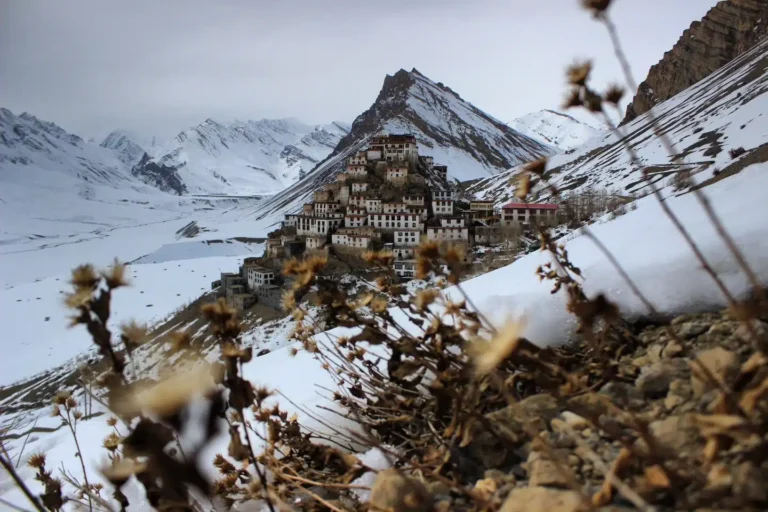
Region: Spiti Valley
Total Duration: 14 Days/13 Nights
Max Altitude: 12,500 ft.
Grade: Moderate +
Best Time: January & February
Temperature: 5°c to -25°c
Mobile Network: JIO, AIRTEL & BSNL

Overview

Advance Ice Climbing Course is conducted in the vicinity of Spiti Valley. The training focuses on Himalayan
Water Ice climbing. Our highly trained, experienced and certified instructors conduct this course.
You will stay in a traditional-Spitian homestay where you will explore and experience the culture and
authentic delicious food.

Team Heaven Riders India designed this Advance Ice Climbing course specifically for those who wish to
discover the exhilarating and fastest-growing sport of ice climbing &
no previous experience is required.

Advance Ice climbing course aims to teach you all the basics necessary to practice ice climbing: proper
climbing technique using technical ice axes and crampons, rope systems and knots, ascending and
descending techniques on ice, anchoring and belaying on Ice, understanding ice protection, safety,
selection of clothing and preparing your pack for the day.
During Ice climbing course, you will learn how to Lead Climb, V-Thread, Retrieval System.

Why Choose an Advance Ice Climbing Course?

A lot of people assume that once they’ve climbed a short frozen waterfall with a guide holding their rope, they understand ice climbing. In reality, that is only the entry point. Advance ice climbing asks a completely different set of questions:

  • Can you read ice quality and choose safe placements on your own?
  • Can you build anchors in ice that will hold a real fall?
  • Can you lead a pitch instead of following one?
  • Can you manage multi-pitch systems, rope work, and rescue scenarios?
  • Can you make sound judgment calls when conditions change mid-climb?

An Advance Ice Climbing Course exists to answer these questions through structured, supervised practice rather than trial and error in the mountains, where mistakes are far less forgiving. Heaven Riders India’s course is built specifically to close this skill gap, turning climbers who can follow a route into climbers who can plan, lead, and safely manage one.

How to Reach

Nearest Airport: Shaheed Bhagat Singh International Airport, Chandigarh.
Flights to Shimla are expensive.
Nearest Train Station: Chandigarh Railway Station.
By Road: Spiti Valley is only connected through road by Shimla – Kinnaur route in winter.
We recommend you land at IGI Airport, New Delhi or Chandigarh Airport or reach by train to
Chandigarh and take an overnight Volvo bus to reach Shimla and join us for Ice Climbing Course.
Pick up time is 6 am.

Who Should Join This Advance Ice Climbing Course?

This course is designed for a specific audience, and being honest about that is part of keeping everyone safe. You are a good fit for this program if:

  • You have completed a basic ice climbing course or have equivalent guided ice climbing experience
  • You have a reasonable level of physical fitness and can sustain physical effort at altitude
  • You have some background in rock climbing, mountaineering, or trekking in technical terrain
  • You are comfortable with exposure and want to build genuine self-sufficiency on ice
  • You are working toward bigger mountaineering objectives that require ice climbing competence

If you are a complete beginner, we recommend starting with a foundational ice climbing program first. Jumping straight into advance-level training without base skills can be unsafe and will limit how much you actually absorb from the course.

Course Objectives: What You Will Actually Learn

The Advance Ice Climbing Course at Heaven Riders India is structured around real climbing competence, not just exposure to ice. By the end of the program, participants are expected to demonstrate the following skills.

1. Advanced Movement Technique on Steep Ice

You will refine your footwork, axe placements, and body positioning for vertical and near-vertical ice, moving beyond the basic “climb straight up” approach toward efficient, energy-conserving technique used on longer routes.

2. Lead Climbing on Ice

This is one of the biggest jumps from a basic to an advance course. Instead of climbing on a top rope set up by an instructor, you will learn to lead — placing your own ice screws as you climb, managing rope drag, and making real-time decisions about protection spacing.

3. Anchor Building in Ice

You will learn multiple anchor systems specific to ice, including screw placements, V-threads (Abalakov anchors), and combined anchor systems, along with how to judge ice quality before trusting your life to it.

4. Multi-Pitch Rope Management

Longer ice routes often require climbing in multiple pitches. You will practice belaying from above and below, transitioning between pitches, and managing rope systems efficiently to avoid wasted time and energy on the wall.

5. Self-Rescue and Crevasse Rescue Basics

Advance climbers need to be able to help themselves and their partners in an emergency. This module covers essential self-rescue techniques, hauling systems, and an introduction to crevasse rescue for glaciated terrain.

6. Reading Ice and Route Assessment

Not all ice is equal. You will learn to visually and physically assess ice quality, identify hazards like hollow ice or hanging daggers, and choose safer lines even when the “obvious” line looks tempting.

7. Weather and Objective Hazard Awareness

Ice climbing conditions change fast. Temperature swings, sun exposure, and time of day all affect ice stability. You’ll learn how experienced climbers plan around these variables instead of getting caught out by them.

8. Physical and Mental Conditioning for Ice

Climbing steep ice is as much about pacing and calm decision-making as it is about strength. We work on breathing, movement efficiency, and staying composed on exposed terrain.

Safety: Our Non-Negotiable Priority

Ice climbing, especially at an advance level, carries real objective risk. Falling ice, changing temperatures, and the physical demands of steep terrain all require careful management. At Heaven Riders India, safety is built into every part of the course design, not treated as an afterthought.

Our approach includes:

  • Low instructor-to-student ratios so every climber gets close supervision, especially during lead climbing practice
  • Certified and experienced instructors with genuine Himalayan ice climbing backgrounds
  • Progressive skill building, so no one is pushed onto terrain beyond their current ability
  • Daily conditions assessment, adjusting routes and plans based on real-time ice and weather conditions
  • Comprehensive rescue training, so climbers aren’t just taught to climb but also to respond if something goes wrong
  • Quality-checked equipment, regularly inspected and replaced according to safety standards

We would rather slow down a session or change a route than compromise on safety. This philosophy is central to how Heaven Riders India runs every course.

Fitness and Preparation Guidelines

Because this is an advance-level program, a reasonable baseline of fitness is expected before you arrive. While our instructors will guide technique, the physical demands of steep ice climbing — sustained arm and calf strength, cardiovascular endurance at altitude, and general mountain fitness — are things you should start building well before the course.

Recommended preparation includes:

  • Regular cardiovascular training (running, cycling, or stair climbing) for at least 6-8 weeks before the course
  • Grip and forearm strength training, since ice climbing places heavy demand on forearms
  • Core and leg strength work to support balance on crampons
  • If possible, some prior gym-based or outdoor rock climbing to build general climbing movement patterns
  • Basic altitude acclimatization awareness if you’re not used to high-altitude environments

Coming in reasonably fit means you’ll spend your energy learning technique instead of just surviving the physical effort, which makes the entire course more valuable.

Best time for Advance Ice Climbing Course

The best time for ice climbing is generally during the winter months from January through early March. This time offers the most reliable and stable ice climbing conditions as temperatures are consistently low to maintain solid ice formation.

If you are a beginner at ice climbing, then January to Feb end is a good duration for learning ice climbing.

Ready to Climb Beyond the Basics?

Advance ice climbing is not just about climbing higher or steeper — it’s about becoming a climber who can think clearly, act decisively, and stay safe in an environment that demands respect. The Advance Ice Climbing Course by Heaven Riders India is built to take you there, with a curriculum grounded in real mountaineering practice, experienced instructors, and a genuine commitment to your growth as a climber.

If you’re ready to move from following routes to leading them, from relying on an instructor’s rope to trusting your own judgment on the ice, this course is your next step.

Get in touch with Heaven Riders India today to check upcoming batch dates and reserve your spot on the Advance Ice Climbing Course.

Tour Plan

Day 01 Pick and Transfer to Spiti Valley

Distance: 250 Kms | Duration: 10-12 Hours | Elevation: 4,070m
* Arrive Shimla
* Pick Up at 6 am, proceed drive to Spiti Valley
* On the way enjoy the beautiful landscapes and stunning views
* Check-in, Rest
Includes: Pick up, Transfer/Travel by Taxi, Homestay, Dinner

Day 02 Orientation and Briefing Day

* Morning Walk and Physical Training
* Breakfast
* Introduction and briefing session about the basic ice climbing course
* Overview of the course, its objectives, safety measures, equipment, etc.
* Lunch
* Hike to the training area
* Dinner, Preparation for next day and Overnight Stay

Includes: Instructor, Gears, Breakfast, Lunch, Dinner, Stay

Day 03 Ice Climbing Session

Includes: Instructor, Gears, Breakfast, Lunch, Dinner, Stay

Day 04 Ice Climbing Session

Includes: Instructor, Gears, Breakfast, Lunch, Dinner, Stay

Day 05 Ice Climbing Session

Includes: Instructor, Gears, Breakfast, Lunch, Dinner, Stay

Day 06 Ice Climbing Session

Includes: Instructor, Gears, Breakfast, Lunch, Dinner, Stay

Day 07 Ice Climbing Session

Includes: Instructor, Gears, Breakfast, Lunch, Dinner, Stay

Day 08 Rest Day

Includes: Breakfast, Lunch, Dinner, Stay

Day 09 Recce of New Ice Fall

Includes: Instructor, Gears, Breakfast, Lunch, Dinner, Stay

Day 10, 11, 12, 13 Advanced Ice Climbing Sessions

Lead Climbing, V-Thread, Retrieval System, Safety
Includes: Instructor, Gears, Breakfast, Lunch, Dinner, Stay

Day 14 Departure Day, drop at Shimla by 9 pm

Includes: Breakfast, Taxi, Drop at Shimla

Day 15 Buffer day to deal with bad weather/road block etc.

Not included in the package

Included/Excluded

  • Pick & Drop: Shimla
  • Certificate of Accomplishment
  • Team of Expert & MOI Certified Instructors
  • All Climbing Equipment & Gear: Ice Axe, Crampons, Boots, Safety Harness, Ice Tools, Carabiners, ATC, Descender, Ropes, Belay Devices
  • Icefall climbing fees & permits
  • Travel/Transportation as per itinerary
  • Stay in Traditional Home Stay during itinerary
  • All meals are North Indian Veg as per itinerary, we serve traditional Spitian Cuisine
  • Tea in morning & evening
  • Safety gears & medical Kit with portable oxygen
  • walkie-talkie for team communication
  • Support Team
  • Any services not mentioned in the inclusions
  • Any Insurances, Cost of any hospitalization, Rescue and Emergency Evacuation, Heli Evacuation.
  • Any Transfers, Air Ticket, Train Ticket, Volvo Ticket, Sightseeing not mentioned.
  • Any Beverages or drinks of any sort or bottled/mineral water, Tips, Personal Clothing, Photography or camera charges.
  • Any Sightseeing or Travel/Transportation except the itinerary.
  • Any costs arising out of unforeseen circumstances or extra or sudden stay due to bad weather, snowfall, rain, landslides, road block, strike, bandh, Govt. or Administrative Ban, vehicle breakdown, etc.
  • Taxes/GST.
Things to Carry

Headwear & Accessories

  • Woolen Cap – 1
  • Sun Cap / Hat – 1
  • Gloves – 1 pair
  • Socks – 3 pairs
  • Woolen Socks – 1 pair
  • UV Protected Sunglasses – 1 (Mandatory)

Clothing (Upper Body)

  • Wind & Waterproof Jacket – 1
  • Fleece Jacket – 1
  • Jacket – 1
  • Collared Full Sleeve T-Shirt – 2
  • Neck Warmer – 1

Bottom Wear

  • Trekking Pant – 2

Footwear

  • Waterproof Trekking Shoes with good grip

Food & Hydration

  • Dry Ration (ORS, Dry Fruits, Chocolates, Protein Bars, etc.)

Medical Essentials

  • Personal Medicines (as per medical advice)
  • Inhalers (for asthma sufferers)

Personal Toiletries

  • Toothpaste
  • Toothbrush
  • Face Wash
  • Hand Sanitizer
  • Cold Cream
  • Sunscreen Lotion
  • Lip Balm / Lip Guard
  • Quick Dry Towel
  • Toilet Paper

Equipment & Essentials

  • Head Lamp – 1 (Mandatory)
  • Four extra pairs of batteries
  • Power Bank (for mobile & camera)
  • Water Bottle – 2 (Mandatory)

Bags & Storage

  • Rucksack (40 Ltrs) with rain cover
  • Daypack (20 Ltrs) with rain cover

Rain Protection

  • Poncho / Rain Suit – 1 (Mandatory)
Mandatory Documents
  • Original & Copy of Valid Govt. Id (any of Passport/Aadhaar Card)
  • Medical Certificate from registered Medical Practitioner (Minimum MBBS)
  • Passport size photograph – Valid passport and visa required for Foreign
Health & Fitness

Trekking demands strong cardiovascular endurance, leg power, core stability, and overall stamina to handle long hours on steep, uneven, and rocky terrain. Depending on the difficulty level, trekkers should ideally be capable of jogging 4–7 km in 20–40 minutes.

Preparing your body in advance significantly enhances safety, performance, and enjoyment during the trek.

Core Physical Fitness Requirements

1. Cardiovascular Endurance

Strong heart and lung capacity are essential, especially for high-altitude treks where oxygen levels are lower.

Training Goal:

  • 30–60 minutes of cardio
  • 4–5 days per week
  • Activities: Jogging, running, brisk walking, swimming, or cycling

2. Leg Strength

Powerful legs are crucial for ascending steep slopes and descending uneven, rocky paths.

Focus Exercises:

  • Squats
  • Lunges
  • Step-ups
  • Calf raises

3. Core & Upper Body Strength

A strong core and upper body help you carry a backpack comfortably for extended hours.

Recommended Exercises:

  • Planks
  • Push-ups
  • Overhead presses
  • Back extensions

4. Flexibility & Stamina

Flexibility reduces muscle stiffness, prevents injury, and improves endurance.

Include:

  • Yoga
  • Dynamic stretching before workouts
  • Static stretching post-workout

Training & Preparation Tips

Stair Climbing

One of the most effective ways to simulate trekking conditions. It prepares you for both ascent and descent.

Load Training

Practice walking with a weighted backpack to replicate real trek conditions.

Rest & Recovery

Allow proper recovery time. Include at least 1–2 rest days per week to prevent overtraining.

Health Check-Up

Consult a medical professional before high-altitude treks, especially if you have:

  • Asthma
  • Hypertension
  • Heart conditions
  • Respiratory concerns

Sample Weekly Training Plan (Example)

Monday / Wednesday / Friday
→ 30–45 minutes brisk walk, jogging, or uphill walking

Tuesday / Thursday
→ Strength training (Squats, Lunges, Planks, Push-ups)

Saturday
→ Long-duration hike or extended stair-climbing session

Sunday
→ Rest day or light stretching / yoga

Key Preparation Goals

  • Build endurance to comfortably carry a weighted backpack for 3–4 hours
  • Achieve the ability to jog 5 km in under 30 minutes (for moderate treks)
  • Begin structured training 4–8 weeks before your trek
Policies

Confirmation Policy

  • The customer receives a confirmation voucher via email within 24 hours of successful booking
  • In case the preferred slots are unavailable, an alternate schedule of the customer’s preference will be arranged and a new confirmation voucher will be sent via email.
  • Alternatively, the customer may choose to cancel their booking before confirmation and a full refund will be processed.

Cancellation Policy

  • Booking amount is strictly non-refundable in all cases.
  • Cancellation requests must be made via email only (reply to your payment receipt email). No cancellations will be accepted via call or WhatsApp.

Refund Structure:

  • Up to 30 days before departure: 10% deduction (gateway & bank charges).
  • 30 to 15 days before departure: 50% deduction.
  • Within 15 days of departure: No refund.

Important Notes:

  • No refund will be provided for cancellations due to bad weather, natural calamities, government restrictions, roadblocks, strikes, landslides, lockdowns, or other unforeseen circumstances beyond our control.
  • If the trip is cancelled by us due to insufficient participants, a full refund will be issued (excluding add-ons such as rentals, insurance, porterage, transport, etc.).
  • Any additional expenses due to delays, extended stay, weather, or emergencies must be borne by the participant.
  • Refunds (if applicable) will be processed within 10 working days to the original payment method.

For More Info: https://heavenridersindia.com/cancellation-policy/

Payment & Booking Policy

  • To confirm your slot, an advance payment of INR 10,000 per person is required via Bank Transfer or UPI.
  • The remaining balance must be paid at least 7 days prior to the pickup date.
  • The booking amount is strictly non-refundable in all cases.
  • After making the payment, please email the transaction details/receipt to:
    heavenridersindia@gmail.com for booking confirmation.

For More Info: https://heavenridersindia/payment-policy/

Frequently Asked Questions

Do I need prior ice climbing experience to join this course?
Yes. This is an advance-level program, and participants are expected to have completed a basic ice climbing course or have equivalent guided experience before joining.
What grade of ice will I be climbing?
Depending on conditions and individual progress, participants typically work up to grade III and IV ice climbing routes by the end of the course.
What is the best time of year for this course?
The course runs during the winter season when ice formations are stable and reliable, typically from late December through February, depending on the specific location and yearly conditions.

Tour Map

Blog & Updates

Articles, Tips, News & Updates

Want To Stay In Touch With Heaven Riders?

We have terrific mountain travel tips, outdoors hacks, travel talks & updates to look forward to.