






- heavenridersindia@gmail.com

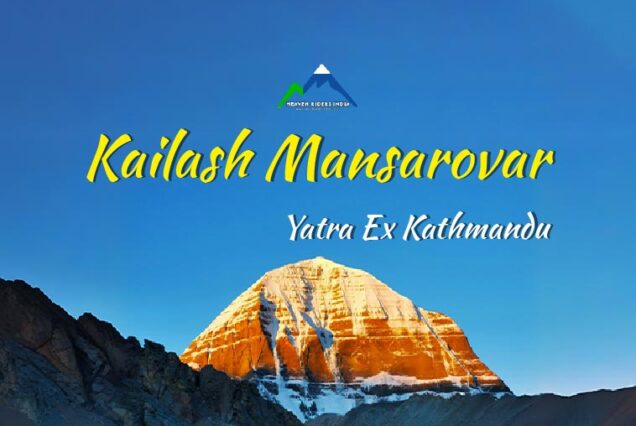
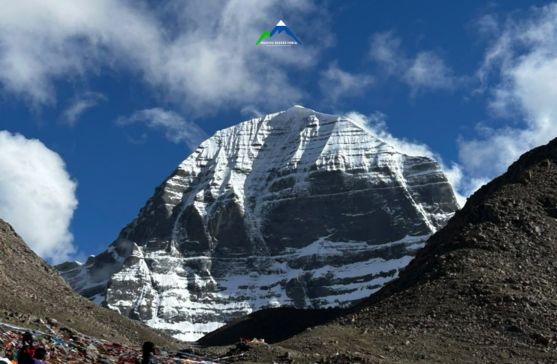
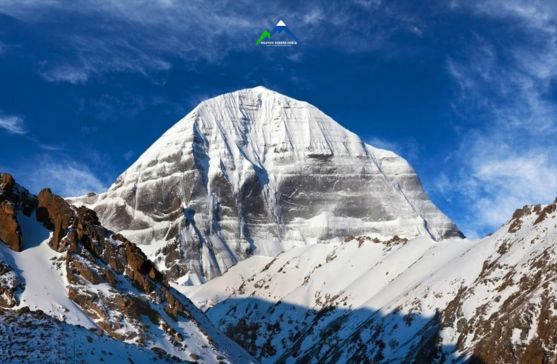
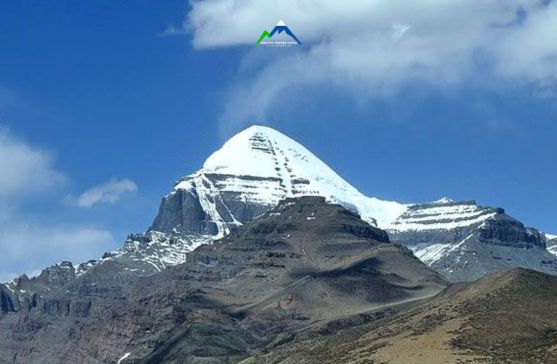
The Kailash Mansarovar Yatra takes pilgrims to two of the most revered natural sites on Earth: Mount Kailash, a striking 6,638-meter peak in western Tibet, and Lake Mansarovar, the highest freshwater lake in the world, sitting at over 4,500 meters above sea level.
The Yatra typically spans 12 to 24 days, depending on the route chosen – via Nepal, via the Lipulekh Pass in Uttarakhand, or via Nathu La in Sikkim. It combines air travel, overland journeys, high-altitude trekking, and religious rituals, making it as much a test of endurance as it is an act of devotion. Every year, pilgrims from India, Nepal, and across the world undertake this journey, drawn by the belief that a single Parikrama of Mount Kailash can wash away the sins of a lifetime.
Because of its remote location, limited seasonal access, and permit requirements, the Yatra needs to be booked and planned well in advance through an authorized operator.
Mount Kailash holds a unique position – sacred to four major religions simultaneously, and unclimbed to this day out of deep religious reverence.
Hinduism: Kailash Mansarovar is believed to be the eternal abode of Lord Shiva and Goddess Parvati, and the mountain itself is regarded as Mount Meru, the axis of the universe.
Buddhism: Tibetan Buddhists consider it the home of Demchok (Chakrasamvara), a symbol of supreme bliss, and the spiritual center of the cosmos.
Jainism: Known as Ashtapad in Jain tradition, it is believed to be the site where Rishabhanatha, the first Tirthankara, attained moksha (liberation).
Bon Religion: For followers of Tibet’s indigenous Bon faith, Kailash is the abode of the sky goddess Sipaimen and the seat of all spiritual power.
Lake Mansarovar, lying at the foot of Mount Kailash, is believed to have been manifested in the mind of Lord Brahma, and a holy dip in its waters is said to cleanse the soul and purify years of accumulated karma.
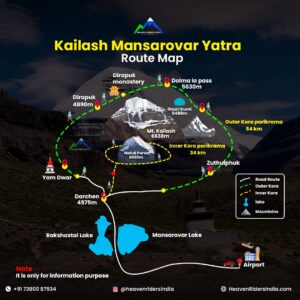
The Parikrama (also called the Kailash Kora) is the ritual circumambulation of Mount Kailash – considered the central and most important act of the entire Yatra. Pilgrims walk a roughly 52-km circular route around the base of the mountain, typically completed over 3 days, passing through some of the most dramatic high-altitude terrain on the planet.
The Parikrama includes a crossing of the Dolma La Pass, the highest point of the journey at over 5,600 meters, considered the most physically demanding – and spiritually significant – stretch of the entire pilgrimage. According to belief, completing one Parikrama absolves a pilgrim of the sins of this lifetime, while 108 circuits are said to grant liberation (moksha) altogether.
Pilgrims who are unable to complete the full trek due to age or health conditions can opt for pony or yak support, or choose a “darshan-only” package that allows them to view and pay respects to the mountain without undertaking the full circuit.
Many pilgrims are unaware that there are actually two forms of Parikrama around Kailash – the Outer Kora and the Inner Kora.
OUTER KORA (Outer Parikrama)
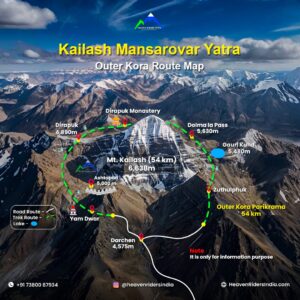
• The standard 52-km circumambulation route most pilgrims undertake.
• Takes 2-3 days, crossing Dolma La Pass at 5,636 meters.
• Open to all pilgrims and does not require any special permission beyond the standard Yatra permit.
INNER KORA (Inner Parikrama / Nandi Parikrama)
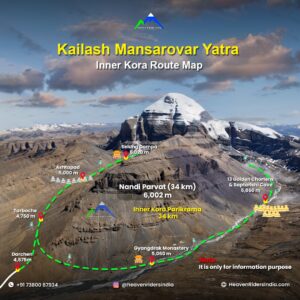
• A shorter but more sacred and challenging route that goes closer to the base of Mount Kailash itself, passing near Nandi Parvat.
• Traditionally, pilgrims are expected to complete at least one Outer Kora before attempting the Inner Kora – it is considered a deeper level of spiritual attainment.
• Access to the Inner Kora has historically been restricted or seasonally closed by Chinese authorities, so it may not be available in every batch or every year – check current access status with your operator before planning around it.
| Feature | Outer Kora | Inner Kora |
|---|---|---|
| Distance | ~52-54 km | ~30-35 km |
| Duration | 2-3 days | 1 day |
| Highest point | Dolma La Pass, ~5,630 m | Saptarishi Cave area, ~5,860 m |
| Difficulty | Strenuous but well-supported | Extreme; minimal support |
| Infrastructure | Monasteries, guesthouses en route | None — no lodges, limited water |
| Permits | Standard Tibet Travel Permit | Requires additional military/border permits |
| Who attempts it | Nearly all pilgrims | Very experienced trekkers only, traditionally after 13 Outer Koras |
The Kailash Mansarovar Yatra isn’t just about the final destination – it takes pilgrims through a series of sacred sites, each with its own spiritual story.
1) MOUNT KAILASH
The centerpiece of the entire Yatra – a pyramid-shaped, snow-capped peak considered the physical embodiment of Mount Meru and the eternal abode of Lord Shiva.
2) LAKE MANSAROVAR
The highest freshwater lake in the world, revered as a place of purification. Pilgrims perform a holy dip and rituals along its shores before heading to Kailash.
3) GAURI KUND
A small, sacred lake located along the Parikrama route, believed to be where Goddess Parvati bathed. It lies just before the ascent to Dolma La Pass.
4) RAKSHAS TAL
Also known as Rakshastal or the “Demon Lake,” this saltwater lake lies adjacent to Mansarovar and is associated with Ravana’s penance to Lord Shiva in Hindu mythology – a striking contrast to the serene, sacred Mansarovar right beside it.
5) HANUMAN TAL
A lesser-known but spiritually significant water body along the route, associated with Lord Hanuman and included in many pilgrim itineraries as a stop for prayer and reflection.
6) YAM DWAR
Literally the “Gateway of Death and Rebirth,” Yam Dwar marks the starting point of the Kailash Parikrama, symbolizing a pilgrim’s spiritual transition as they begin the sacred circuit.
7) DOLMA LA PASS
The highest and most challenging point of the Outer Kora at over 5,600 meters, named after Goddess Tara (Dolma). Crossing this pass is considered a powerful spiritual milestone in the Yatra.
8) ASHTAPAD
Revered in Jain tradition as the site where Rishabhanatha attained liberation, Ashtapad is considered a deeply sacred stop for Jain pilgrims undertaking the Yatra.
9) NANDI PARVAT
A peak near Mount Kailash believed to represent Nandi, the sacred bull and vehicle of Lord Shiva, standing eternal guard near his abode.
10) SAPTARISHI CAVES
A set of caves associated with the Saptarishis (the seven revered sages of Hindu tradition), believed to have meditated in this region during their spiritual journeys.
11) PASHUPATINATH TEMPLE
One of the most sacred Shiva temples in the world, located in Kathmandu, Nepal. Most Yatra itineraries include a visit here as pilgrims begin or transit through their journey.
12) JAL NARAYAN
A revered water shrine associated with Lord Vishnu, often included as a spiritual stop for pilgrims traveling through Nepal en route to Tibet.
13) BUDDHA STUPA (BOUDHANATH)
One of the largest and most significant Buddhist stupas in the world, located in Kathmandu – a peaceful and iconic stop for pilgrims of all faiths passing through Nepal.
14) GUHYESHWARI MATA TEMPLE
An important Shakti Peeth temple in Kathmandu, dedicated to Goddess Guhyeshwari, and commonly visited alongside Pashupatinath as part of the Nepal-route itinerary.
Mount Kailash sits in the rain-shadow of the Himalayas at over 4,500 meters, which means its climate behaves very differently from the rest of the Indian subcontinent. Winters (November–April) bring heavy snow, sub-zero cold, and blocked passes, making the region completely inaccessible to pilgrims. The travel window each year is genuinely short — realistically May to early October — so timing your visit correctly matters more here than on almost any other pilgrimage.
May — The Golden Start
Daytime temperatures hover around 8–17°C, while nights can still dip to -3°C to -8°C. Snow is beginning to melt off the lower trails, but higher sections like Dolma La Pass may still hold late-season snow, which can make footing tricky. May is also special because it usually overlaps with the Saga Dawa Festival — one of the holiest occasions in the Tibetan Buddhist calendar, marking the birth, enlightenment, and parinirvana of the Buddha, observed on the 15th day of the fourth Tibetan month (in 2026, this falls on May 31).
Thousands of Tibetan pilgrims converge on Kailash during this period to perform the kora, and a giant prayer-flag pole at Tarboche is re-erected in a major ceremony. It’s an extraordinary time to witness the mountain’s living spiritual culture — but expect crowded trails, and book accommodation and permits well in advance since prices for porters and guesthouses often rise during this window.
June — Arguably the Best All-Round Month
By June, the winter snow has largely melted, making the Kailash Kora trail more stable and secure underfoot. Daytime temperatures climb to a comfortable 11–17°C, nights remain cool but manageable.
The tail end of the Saga Dawa energy often carries into early June, and this is also the start of the official Indian government MEA batches via Lipulekh and Nathu La. Toward the very end of the month, the first hints of monsoon moisture can bring occasional rain.
July — Peak Season, With a Catch
July is one of the most popular months for the yatra, largely because it aligns with summer travel schedules and the warmest daytime conditions of the year. However, this is also monsoon season across the wider Himalayan region.
The good news: because Kailash sits in a rain-shadow zone, it receives far less rainfall than areas like Kathmandu or the lower Himalayan foothills — average precipitation is modest, and most showers are short-lived rather than prolonged downpours. Still, cloud cover can occasionally obscure mountain views, and trails can turn muddy in patches.
August — Warm, Busy, and Green
August continues the monsoon-adjacent pattern of July: warm days, occasional rain, and lush, green valleys along the approach routes. It remains one of the most heavily booked months, since it’s peak season for both the Lipulekh and Nathu La government batches.
Landscapes are at their most vivid, but expect more fellow pilgrims on the trail and at guesthouses.
September — The Photographer’s Month
By September, the monsoon clears out, leaving some of the most consistently clear skies of the entire season. Visibility is excellent, crowds thin out noticeably compared to June–August, and the cooler nights bring a crisp, high-altitude clarity to views of both Kailash and Mansarovar. This is widely considered one of the two best windows of the year, alongside May–June.
Early October — Shoulder Season, Handle With Care
Early October can still offer beautiful, clear conditions, but this is genuinely a shoulder period — early snowfall becomes increasingly likely as the month progresses, and guesthouses along the route begin closing in preparation for winter.
Route disruption risk rises sharply after the first couple of weeks, so this window suits only pilgrims with flexible dates and operators experienced in reading late-season conditions.
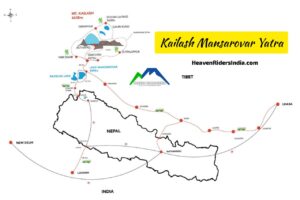
This is where most first-time pilgrims get confused, so let’s break it down clearly. As of 2026, there are effectively four practical ways to reach Mount Kailash, and the right one for you depends heavily on your fitness, budget, and how much time you can spare.
This is India’s oldest and most historic route, in continuous use since 1954, entering Tibet through Lipulekh Pass (about 5,334 meters) in Uttarakhand. It is organized by India’s Ministry of External Affairs (MEA) in coordination with the Chinese government, and involves a genuine multi-day Himalayan trek on the Indian side before crossing into Tibet.
It is physically the most demanding of the government routes, but also the most traditional and deeply rooted in yatra history.
For 2026, the MEA has scheduled the pilgrimage across 20 batches of 50 pilgrims each, running from June to August, split evenly between the Lipulekh and Nathu La routes. Applications are accepted only through the official government portal, kmy.gov.in — there is no offline registration and no spot booking.
Selection happens through a computerized draw of lots, and selected pilgrims are required to appear in Delhi for mandatory medical checks before departure.
Nathu La (about 4,310 meters), on the Sikkim-Tibet border, is the more comfortable of the two MEA routes because it is fully motorable on both the Indian and Tibetan sides — there is no multi-day high-altitude trek to reach the border. The journey runs roughly 20-25 days in total (about half in India, half in Tibet), beginning from Gangtok.
Because the road journey through Tibet is considerably longer, this route also tends to be the more expensive of the two government options. It is generally recommended for pilgrims over 55, those with a history of altitude sickness, or anyone who wants to minimize physical trekking before reaching Kailash itself — though note that the parikrama around the mountain itself still has to be walked regardless of which route you take to get there.
For pilgrims who don’t want to go through the Indian government’s lottery-based system, or who prefer more flexible dates, private tour operators run pilgrimages via Nepal:
Some pilgrims, especially those combining the yatra with a broader Tibet tour, fly into Lhasa and travel overland across the Tibetan plateau via Shigatse and Saga before reaching Darchen.
This is a longer, more scenic route that also allows stops at other major Tibetan sites like the Potala Palace and Everest Base Camp, but it demands more time for acclimatization given the sustained high altitude of the plateau.
It’s worth being transparent about something: in 2026, Nepal formally objected to India and China conducting the Lipulekh-route yatra, asserting its own historical claim over the Lipulekh, Limpiyadhura, and Kalapani area. India’s Ministry of External Affairs rejected this claim, describing the route as an established and continuous pilgrimage corridor used since 1954, and the yatra proceeded as scheduled via both Lipulekh and Nathu La for the June-August 2026 season.
This is an evolving geopolitical issue, and Heaven Riders India always recommends confirming the latest route status directly with the MEA or your operator before finalizing travel plans, since border arrangements can shift from year to year.
We won’t sugarcoat this: the Kailash Mansarovar Yatra is physically one of the most demanding pilgrimages in the world, and it is not suitable for everyone. Here’s what makes it hard, in plain terms:
High altitude, throughout.
You will spend the majority of the trip above 4,500 meters, with the Outer Kora’s Dolma La Pass reaching nearly 5,630 meters — an altitude where the air holds roughly half the oxygen available at sea level. Altitude sickness (Acute Mountain Sickness) is a genuine risk regardless of age or fitness level, and can affect even experienced trekkers if acclimatization is rushed.
Unpredictable weather.
Even in peak season (May-September), temperatures can swing from pleasant sunshine to sudden snow, hail, or freezing wind within hours, particularly at Dolma La.
Limited medical infrastructure.
Once you’re on the Dirapuk-to-Zutulpuk stretch of the kora, there is no vehicle access and minimal medical support. Government routes provide liaison officers and basic medical checkpoints, but serious emergencies can require slow, difficult evacuation.
Sustained walking at altitude.
Day 2 of the Outer Kora — 22-24 kilometers with a steep climb to nearly 5,630 meters — is, by most pilgrims’ own accounts, one of the hardest single days of physical exertion they have ever undertaken, made harder by thin air rather than technical climbing difficulty.
Fitness and health screening are mandatory, not optional.
Government-organized batches require a medical fitness certificate, and operators commonly recommend a body weight in a healthy BMI range (many operators cite a BMI of 27 or below as a soft benchmark) along with no major cardiac, respiratory, or blood pressure conditions.
Pilgrims are typically required to submit a doctor’s fitness certificate before departure, and anyone declared unfit is not permitted to travel.
That said — thousands complete it every year, including pilgrims well into their 60s and 70s, especially via the gentler Nathu La or helicopter routes, or by using yaks and ponies for portions of the Outer Kora where permitted.
The key is honest self-assessment, proper training in the months before departure (cardio conditioning, stair-climbing, long-distance walking), gradual acclimatization once in Tibet, and travelling with an experienced operator who takes altitude sickness seriously rather than rushing the schedule.
Given the extreme altitude and physical demands of the Yatra, operators and authorities apply certain eligibility criteria:
• Age: Generally open to pilgrims between 18 and 70 years, though this can vary by operator and route. Pilgrims above 60 typically require additional medical clearance.
• Medical Fitness: Pilgrims must be free from serious heart conditions, chronic respiratory illness, uncontrolled high blood pressure, or any condition that could be aggravated by high-altitude, low-oxygen environments.
• Physical Fitness: Ability to walk several kilometers daily at high altitude is essential – prior trekking experience is a strong advantage, particularly for the Outer Kora.
• Nationality Requirements: Indian nationals travelling via the Nepal route need a valid passport and Chinese group visa; those travelling via the Lipulekh route (MEA-organized) must apply and be selected through the official government process.
• Medical Certification: A fitness certificate issued by a qualified MBBS/MD doctor is mandatory for all pilgrims before departure.
Because the Yatra crosses into Tibetan Autonomous Region (China) and involves remote high-altitude travel, documentation requirements are strict and must be completed well in advance of departure.
REQUIRED DOCUMENTS FOR TRAVEL:
1) Valid Passport
Must have a minimum of 6 months validity from the date of travel, with at least 2-3 blank visa pages.
2) Tibet/China Visa & Special Permit
This includes the Chinese Group Visa and the Tibet Travel Permit. Both are arranged on your behalf and included in your package – you will not need to apply for these independently.
3) Medical/Fitness Certificate
Must be issued by a qualified MBBS or MD doctor only, confirming you are medically fit to undertake high-altitude travel. Self-certified or non-specialist certificates are typically not accepted.
4) Passport-size Photograph
The photo must be very clear, with a plain background – no sunglasses, no tilak, and no visible marks on the face, as per Chinese visa photo specifications.
5) Voter ID Card
Required for travel to Kathmandu, as it is a mandatory identification document for Indian nationals traveling via land or air routes to Nepal.
6) Travel Insurance
A valid travel insurance policy covering a minimum of 16 days and maximum of 18 days, from India to India (Plan 360 / Indian Plan), is required – this should specifically cover high-altitude travel and emergency evacuation.
TIP: Submit all documents to your operator at least 30-45 days before departure to allow sufficient time for Chinese visa and Tibet permit processing.
One of the most fascinating aspects of Mount Kailash is how dramatically different it appears from each direction – pilgrims often say the mountain reveals a different “face” and energy depending on where you view it from during the Parikrama.
• South Face: The most commonly photographed view, marked by a striking vertical crevice running down the rock face, which some interpret as a symbolic swastika – a sacred symbol in Hindu, Buddhist, and Jain traditions.
• East Face: Visible from the Dolma La Pass side, associated with quieter, more introspective energy along the trek.
• West Face: Seen from near Darchen, offering the classic pyramid silhouette pilgrims recognize from most photographs.
• North Face: The most rarely seen and least accessible face, viewed only from specific points along the Inner Kora.
Many pilgrims describe the experience of seeing all four faces during the Parikrama as a symbolic journey through different states of consciousness – a fitting metaphor for the transformative nature of the Yatra itself.
The Kailash Mansarovar Yatra is a journey that demands preparation, patience, and the right travel partner. From securing permits and visas to organizing acclimatization, accommodation, and Parikrama logistics, every detail matters when you’re undertaking a pilgrimage at this altitude and remoteness.
Ready to begin your journey to Mount Kailash and Lake Mansarovar?
Get in touch with Heaven Riders India for a customized Kailash Mansarovar package, transparent cost breakdown, and complete assistance with permits, documentation, and booking – from departure to your safe return home.


 Trustindex verifies that the original source of the review is Google.
  Trustindex verifies that the original source of the review is Google.
  Trustindex verifies that the original source of the review is Google.
  Trustindex verifies that the original source of the review is Google.
  Trustindex verifies that the original source of the review is Google.
  Trustindex verifies that the original source of the review is Google.
  Trustindex verifies that the original source of the review is Google.
  Trustindex verifies that the original source of the review is Google.
  Trustindex verifies that the original source of the review is Google.
 Trustindex verifies that the original source of the review is Google.


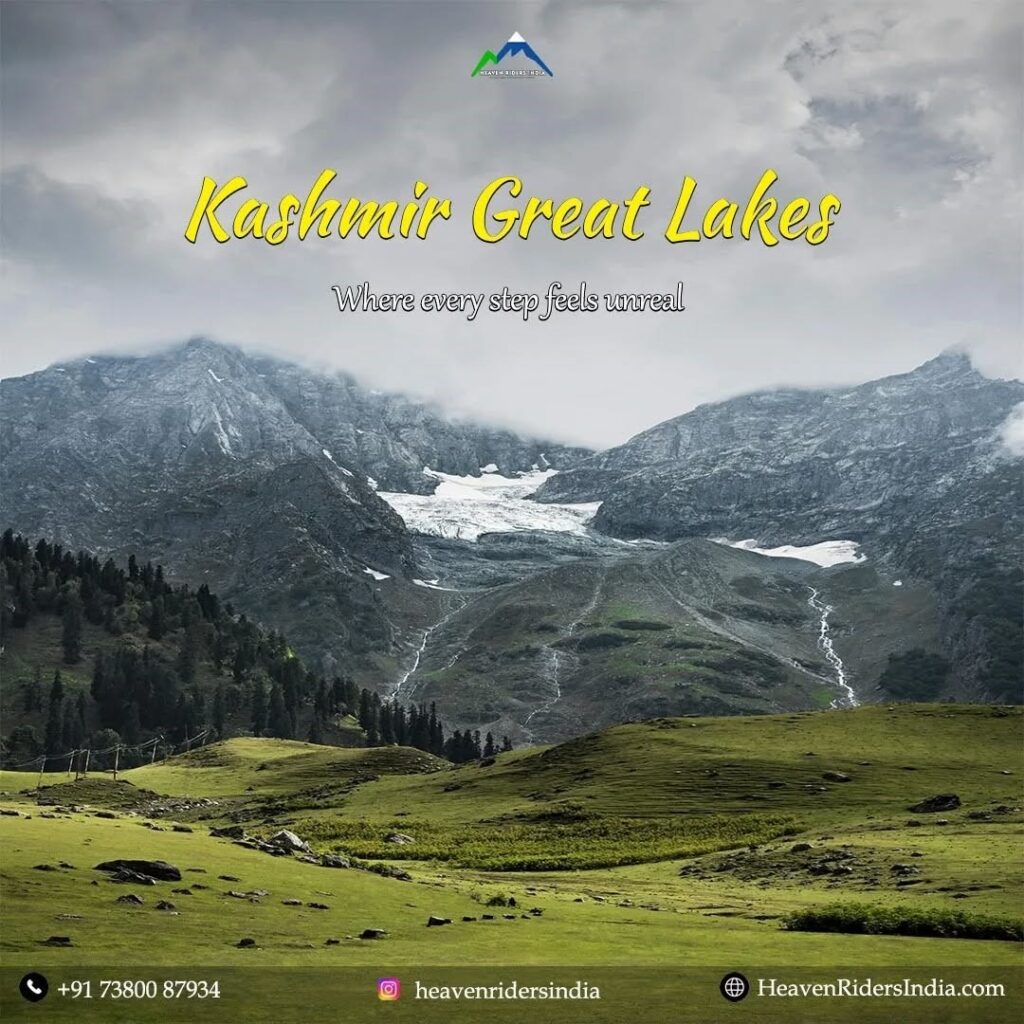
Kashmir is known for its snow-capped mountains, green valleys, and Cristal clear natural lakes. The Kashmir Great Lakes Trek is one of the most mesmerizing treks among all the other…