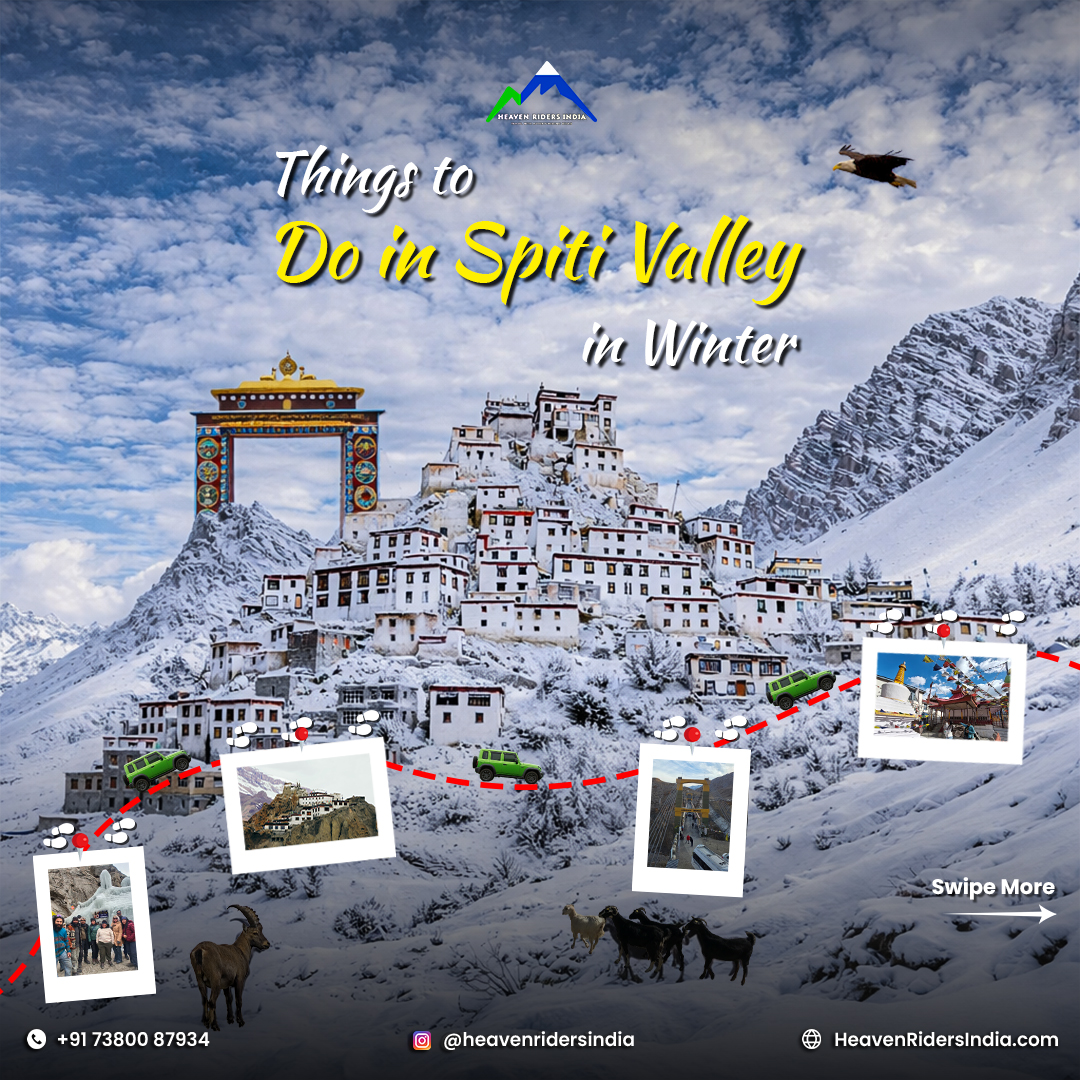
Spiti Valley looks completely different when winter arrives. The brown mountains turn white after snowfall, small villages sit quietly beneath snow-covered peaks, and ancient monasteries create a beautiful contrast against the cold desert landscape. For travelers who enjoy peaceful destinations, mountain adventures, and unusual travel experiences, winter is a special time to explore this remote part of Himachal Pradesh.
There are plenty of activities to do in Spiti during winters, whether you love photography, local culture, road trips, wildlife, or simply spending time in the mountains. However, winter travel here requires careful planning because temperatures can drop well below freezing, and snowfall may affect road access.
At Heaven Riders India, we help travelers experience the winter beauty of the Himalayas through planned journeys and local travel support. In this guide, you will discover the best winter activities in Spiti Valley, along with useful tips to help you plan your trip.
1. Experience a Snow-Covered Winter Road Trip
A winter road trip is one of the most exciting activities to do in Spiti during winters. As you travel through the mountains, you can see snow-covered slopes, frozen streams, remote villages, and dramatic valleys. Every turn offers a different view, making the journey as memorable as the destination.
The route through Shimla and Kinnaur is generally used for winter travel to Spiti because the Manali–Kaza route is usually closed during the colder months due to snow around high mountain passes. Even then, road conditions can change quickly, so travelers should check local updates before starting their journey.
Moreover, winter roads require experienced drivers who understand mountain terrain, black ice, and changing weather. Avoid driving after dark whenever possible, and never continue along a route that local authorities have closed.
If you want to experience the snowy landscape without arranging every detail yourself, explore the Spiti Winter Expedition by Heaven Riders India. It is a useful starting point for planning your winter road adventure.
2. Explore Kaza in Its Winter Beauty
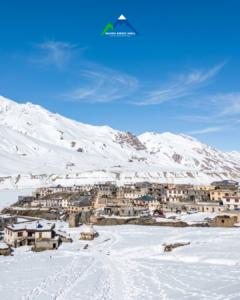
Kaza is the main town of Spiti Valley and a practical base for exploring nearby attractions. During winter, the town becomes quieter, and the surrounding mountains often look spectacular after fresh snowfall. Walking through its streets gives you a chance to experience local life away from the busy summer travel season.
You can visit local shops, enjoy hot tea, try regional food, and speak with residents about how they manage daily life during the cold months. At the same time, you should remember that some businesses and facilities may operate for limited hours in winter.
Another reason to explore Kaza is its location. From here, travelers can plan visits to nearby monasteries and villages, depending on road access and weather conditions.
For a comfortable visit, keep your sightseeing flexible. Instead of trying to cover every attraction in one day, allow extra time for road delays, rest, and changing weather. This makes your winter Spiti trip more enjoyable and less stressful.
3. Visit Key Monastery for Culture and Mountain Views
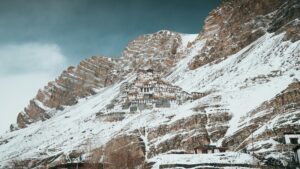
Key Monastery, also known as Ki Gompa, is one of the best-known cultural attractions in Spiti Valley. Located on a hill overlooking the Spiti River, the monastery is known for its traditional architecture, Buddhist heritage, and dramatic mountain setting.
In winter, the surrounding landscape can look especially beautiful when snow settles across the hills. Visitors can learn about Buddhist traditions, observe the monastery’s architecture, and enjoy the peaceful atmosphere of the region.
However, a monastery visit is more than a photography stop. Dress modestly, speak quietly, and follow any instructions provided by the monks or monastery staff. Always ask before taking photographs inside prayer areas or of people.
Road conditions may also affect access to Key Monastery during heavy snowfall. Therefore, confirm local conditions before leaving Kaza, and do not assume that every attraction will be accessible on a particular day.
For travelers interested in culture, history, and quiet mountain scenery, this is one of the most rewarding things to do in Spiti in winter.
4. Discover Snow-Covered Villages Like Kibber and Langza
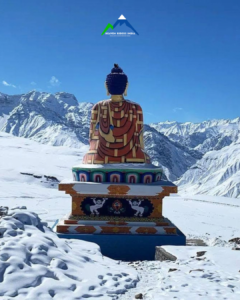
Spiti’s villages offer a closer look at life in the high Himalayas. Kibber, Langza, Hikkim, and Komic are popular stops on many Spiti itineraries because of their mountain views, local traditions, and remote settings.
During winter, these villages may be surrounded by snow-covered fields and white mountain slopes. Their traditional houses and narrow lanes create excellent opportunities for photography. You can also learn about local customs, traditional homes, and the challenges of living in a cold, high-altitude region.
Kibber is particularly well known for its location near snow leopard habitat. Langza is famous for its large Buddha statue and fossil-rich surroundings, while Hikkim attracts visitors interested in its high-altitude post office. Komic is another well-known high-altitude settlement.
Nevertheless, access to these villages depends on snowfall, road clearance, and local conditions. Some routes may become difficult or temporarily inaccessible during deep winter. Visit only when local drivers or authorities confirm that the journey is safe.
If you enjoy remote destinations and want to see a quieter side of the Himalayas, add these villages to your winter travel plan where conditions allow.
5. Try Winter Photography in the Himalayas
If photography is your passion, Spiti Valley offers plenty of opportunities during winter. Snow-covered mountains, traditional villages, monastery walls, frozen water, and clear skies provide a range of subjects for both beginners and experienced photographers.
Early morning can be a good time to capture soft light across the mountains. Meanwhile, late afternoon may bring warm colours to the surrounding peaks when the weather is clear. You can also photograph local homes, prayer flags, mountain roads, and everyday village life.
However, winter photography comes with a few challenges. Cold temperatures can drain camera batteries faster than usual, so carry spare batteries in an inside pocket. Keep your camera protected from snow and moisture, and avoid exposing it to sudden temperature changes that may cause condensation.
Most importantly, respect local people and religious spaces. Ask permission before photographing residents, and follow the rules at monasteries.
For travelers who want to combine scenic drives with photography, a winter road trip to Spiti offers a chance to capture landscapes that look very different from those seen during summer.
6. Enjoy Stargazing Under Clear Winter Skies
Spiti Valley is known for its remote mountain setting and relatively low levels of urban light pollution. When the sky is clear, stargazing can become one of the most memorable winter activities in the region.
Away from bright lights, you may be able to see numerous stars and, under suitable conditions, the Milky Way. The experience is especially appealing to travelers who enjoy astronomy, night photography, or simply sitting outdoors and watching the sky.
For the best experience, choose a safe location near your accommodation rather than walking far into unfamiliar terrain after dark. Check the weather forecast, carry a torch, and wear several warm layers. A tripod is useful if you want to take long-exposure photographs.
Keep in mind that clouds, snowfall, and moonlight can affect visibility. There is no guarantee that the sky will be clear during your visit.
Although it may be tempting to stay outside for hours, extreme cold can become dangerous. Take regular breaks indoors and never sacrifice your safety for a photograph.
7. Experience a Local Homestay and Traditional Spitian Food
A winter trip to Spiti is also an opportunity to experience local hospitality. Staying in a suitable homestay can help you understand how residents live through long, cold winters while giving you a comfortable place to rest after a day outdoors.
You may get the chance to enjoy local dishes, learn about regional customs, and talk with your hosts about village life. Tibetan-influenced foods such as momos and thukpa are popular options to look for, while hot tea can be especially welcome after spending time in the cold.
Depending on your accommodation, you may also experience traditional heating arrangements and the slower pace of winter life. Facilities vary from one property to another, so confirm heating, hot water, meals, and power arrangements before booking.
Choose accommodation that is suitable for winter conditions, and carry personal essentials in case supplies are limited. Being respectful of local customs and avoiding unnecessary waste will also help you travel responsibly.
For many visitors, these simple moments become just as memorable as the snow-covered scenery.
8. Look for Himalayan Wildlife Responsibly
Spiti’s rugged terrain supports wildlife adapted to cold, high-altitude conditions. The region around Kibber is known for snow leopard habitat, and travelers may also encounter signs of other mountain animals, including blue sheep.
Winter is an important season for wildlife enthusiasts, but spotting animals in their natural environment requires patience and realistic expectations. A snow leopard sighting is never guaranteed, even in areas known for the species.
If wildlife watching is part of your trip, consider seeking guidance from experienced local trackers or responsible wildlife professionals. Use binoculars where possible, keep a respectful distance, and never chase animals or disturb them to get a photograph.
You should also avoid leaving food waste behind or approaching wildlife for selfies. These actions can harm animals and affect their natural behaviour.
Remember that remote wildlife areas can be difficult to reach during winter. Check access conditions before travelling, and avoid entering restricted areas or attempting difficult routes without suitable local guidance.
For nature lovers, responsible wildlife observation offers a chance to appreciate Spiti’s environment while respecting the animals that live there.
9. Enjoy Snow Walks and Short Winter Hikes
Snow walks around accessible villages can be a pleasant way to experience Spiti at a slower pace. Instead of spending the entire day inside a vehicle, you can explore nearby landscapes on foot, enjoy mountain views, and observe details that are easy to miss from the road.
However, winter walking is different from a regular summer hike. Snow can hide uneven ground, ice can make paths slippery, and weather conditions may change quickly. Even a short walk can become difficult if you are not wearing suitable footwear.
Choose short, locally recommended routes and avoid steep slopes, frozen water bodies, and unfamiliar trails. Carry warm clothing, water, snacks, and a charged phone. Inform your accommodation or guide before heading out.
Also, remember that high-altitude winter conditions can affect your breathing and energy levels. Walk slowly and allow time for rest. If you experience symptoms of altitude sickness, do not continue ascending.
Long winter treks and remote hikes should be attempted only with suitable equipment, trained guidance, and a route-specific safety plan. For most visitors, a short walk near an accessible village is a better way to enjoy the snow.
10. Experience the Adventure of a Winter 4×4 Expedition
A winter 4×4 expedition is a good option for travelers who want to experience Spiti’s challenging roads and remote scenery without riding a motorcycle in extreme conditions.
Suitable four-wheel-drive vehicles can help experienced drivers navigate certain snow-covered or rough mountain roads when conditions permit. Along the way, you may pass frozen streams, mountain cliffs, traditional villages, and wide-open valleys.
Still, a 4×4 vehicle does not make every road safe. Black ice, heavy snowfall, landslides, and road closures can affect even experienced drivers. The itinerary must remain flexible, and the driver should follow local restrictions.
Before booking, ask about the vehicle, driver experience, winter accommodation, meals, emergency arrangements, and what happens if weather prevents access to a planned destination.
Heaven Riders India offers a Spiti Winter Expedition for travelers interested in a planned winter journey. You can also explore our Spiti Valley tour options to compare available travel experiences.
Choose an itinerary that prioritises safety and realistic travel times over the number of places visited.
11. Experience Local Festivals and Winter Traditions
Winter can also provide an opportunity to learn about Spiti’s local traditions. Festivals such as Losar, which marks the Tibetan New Year, are celebrated in Buddhist communities around the region. Dates and celebrations vary according to the local calendar and community traditions.
When your travel dates coincide with a local celebration, you may be able to learn about traditional customs, religious practices, and community gatherings. However, visitors should not assume that every village will hold a public event during their stay.
Check local dates before planning your itinerary, and ask residents or your tour organiser about events that visitors may attend. Follow instructions, seek permission before taking photographs, and remember that religious ceremonies are primarily community occasions rather than tourist performances.
If no festival is taking place during your visit, monastery architecture, village walks, and conversations with local residents still offer valuable ways to understand Spiti’s culture.
Best Time to Enjoy Winter Activities in Spiti Valley
December to February is generally considered the core winter period in Spiti Valley. During these months, temperatures can fall well below freezing, and some locations may experience temperatures near -20°C or lower. Actual conditions vary with altitude, weather, and location.
December can bring the first major winter conditions, while January and February often offer intense cold and snow-covered scenery. However, heavy snowfall can also make travel more difficult. Snowfall is not guaranteed at every location, and road access can change from day to day.
The best time for your winter Spiti trip depends on what you want to experience. If your priority is snowy landscapes, plan around the expected winter conditions while keeping your itinerary flexible. If you prefer easier road travel, discuss suitable dates and routes with a local operator before booking.
For official destination information and travel guidance, visit the Himachal Pradesh Tourism website.
Essential Tips for a Safe Winter Spiti Trip
Before travelling, prepare for extreme cold and limited services. Carry thermal base layers, insulated jackets, gloves, woollen socks, a warm cap, and footwear with good grip. Sunglasses and sunscreen are also useful because snow can reflect strong sunlight.
Next, book accommodation that is suitable for winter and confirm how heating, meals, and hot water are provided. Keep some cash with you, since digital payment services and ATMs may not always be available.
Acclimatise gradually, avoid overexertion, and learn the symptoms of altitude sickness. Headaches, nausea, dizziness, and unusual tiredness should not be ignored, especially if symptoms worsen. Seek medical help when needed.
Furthermore, keep spare phone batteries or a power bank warm, carry essential medicines, and share your travel plan with someone at home. Travel with an experienced driver on winter mountain roads, and follow local administration updates about closures and weather warnings.
For more official guidance, consult Himachal Pradesh Tourism’s travel safety tips. Most importantly, be ready to change your plans if conditions become unsafe.
Plan Your Winter Spiti Adventure with Heaven Riders India
Spiti Valley offers a different kind of winter holiday. You can explore quiet mountain villages, visit ancient monasteries, photograph snow-covered landscapes, look for wildlife, enjoy local food, and experience the thrill of winter road travel.
However, the same conditions that make Spiti special can also make it challenging. Therefore, careful route planning, suitable accommodation, warm clothing, and experienced local support should be part of every winter itinerary.
At Heaven Riders India, we help travelers plan Himalayan journeys based on their interests, available dates, and travel requirements. Whether you are looking for a winter road trip, a photography-focused holiday, or a snow-filled adventure, explore our Spiti Valley tours to find an option that suits your plans.
Ready to explore Spiti in winter?
Visit Heaven Riders India or explore our Spiti Winter Expedition for more details.
Enquire Now: +91 73800 87934
Plan carefully, respect the mountains, and enjoy the quieter side of the Himalayas with Heaven Riders India.