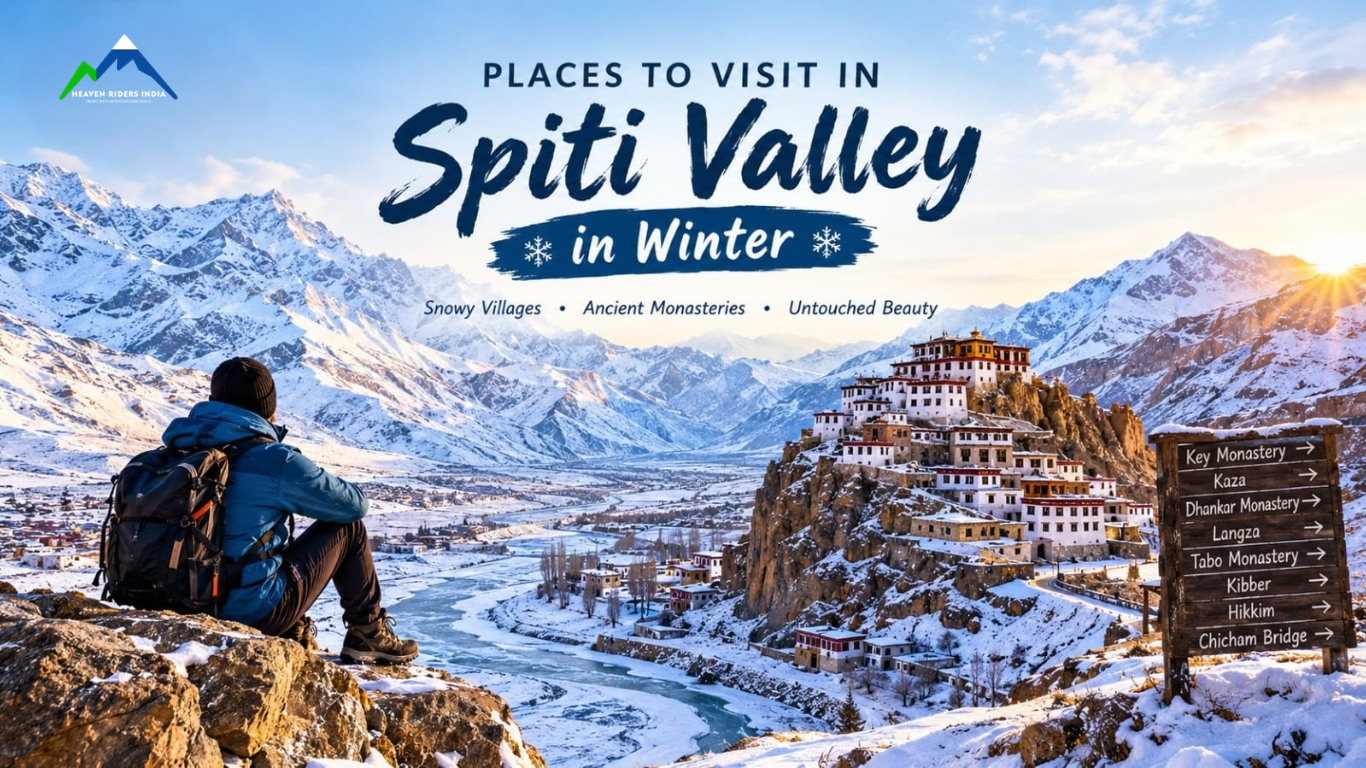
Spiti Valley is beautiful throughout the year, but winter gives this remote Himalayan region a completely different look. From November to March, snow gradually covers its villages, mountain roads, and surrounding peaks. The landscape becomes quieter, the rivers begin to freeze, and everyday life in the valley slows down with the changing weather.
For travellers who enjoy peaceful destinations, mountain adventures, and experiences away from crowded tourist spots, a winter trip to Spiti Valley can be something special.
Winter travel here does require preparation. Temperatures can fall well below freezing, road conditions can change quickly, and some villages become difficult to access. However, with the right planning and local guidance, you can experience a side of Spiti that most summer travellers never get to see.
At Heaven Riders India, we organise winter adventures in the Himalayas, including our Spiti Winter Expedition. Our focus is on helping travellers explore the region with experienced local support, suitable vehicles, and proper attention to high-altitude travel.
If you are planning a winter adventure, here are some of the best places to visit in Spiti Valley.
Why Visit Spiti Valley in Winter?
Spiti is a high-altitude cold desert in Himachal Pradesh. During Winter, the valley attracts travellers with its mountain roads, monasteries, villages, and adventure activities. Winter offers a different experience all together.
The first thing you will notice is the change in the landscape. White snow covers the mountains, traditional houses stand out against the frozen surroundings, and the roads wind through some incredible Himalayan scenery.
There are several reasons why travellers choose Spiti in winter:
- Peaceful surroundings: Fewer tourists visit during winter, giving you more opportunities to enjoy the valley without large crowds.
- Snow-covered landscapes: Experience frozen rivers, snow-covered villages, and beautiful mountain views.
- Wildlife experiences: Winter is a good season for spotting Himalayan wildlife, including the elusive snow leopard.
- Local culture: Get a closer look at traditional Spitian life, local food, and winter celebrations.
- Photography opportunities: Snow-covered monasteries, old villages, and dramatic mountain landscapes make excellent subjects for photography.
- Adventure: From winter drives to guided walks and wildlife tracking, there is plenty to experience.
A winter journey through Spiti is challenging, though. Temperatures can drop to -20°C or even lower in some areas, and weather conditions may affect road access. It is important to travel with proper preparation.
Top 10 Places to Visit in Spiti Valley During Winter
1) Kaza
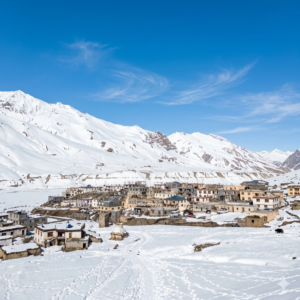
Kaza is the main town and administrative centre of Spiti Valley. It is also one of the most important bases for exploring the surrounding villages and monasteries.
During winter, Kaza looks completely different. Snow-covered houses, quiet streets, and distant mountain views give the town a peaceful atmosphere.
You can spend time exploring the local market, interacting with residents, enjoying traditional Spitian food, and visiting nearby attractions.
Kaza is also an important stop for travellers on a winter Spiti expedition because accommodation, supplies, and local facilities are available here, although services may be limited during severe weather.
2) Key Monastery
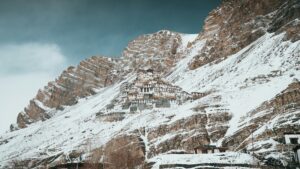
Key Monastery, also known as Ki Monastery, is one of the most recognisable landmarks in Spiti Valley.
Built on a hill overlooking the Spiti River, this ancient Buddhist monastery offers beautiful views of the surrounding mountains. Its white walls, traditional architecture, prayer rooms, and colourful prayer flags make it a memorable place to visit.
In winter, fresh snow adds another layer of beauty to the monastery. You can explore its peaceful surroundings and learn about Buddhist traditions and the history of the region.
If you are visiting Spiti for the first time, Key Monastery should definitely be on your itinerary.
3) Dhankar Monastery
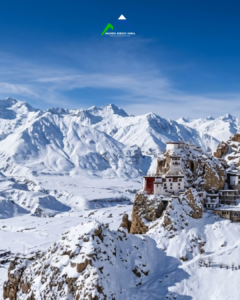
Dhankar Monastery is located high above the confluence of the Spiti and Pin rivers. Its dramatic position on a rocky cliff makes it one of the most interesting monasteries in the valley.
The monastery has a long history and was once the traditional seat of the rulers of Spiti. Inside, you can find traditional Buddhist artwork, prayer rooms, and religious objects.
Winter gives the surrounding landscape a completely different appearance. The snow-covered mountains and deep valleys create beautiful views from the monastery.
However, access can become difficult during heavy snowfall, so check local road conditions before planning your visit.
4)Langza Village
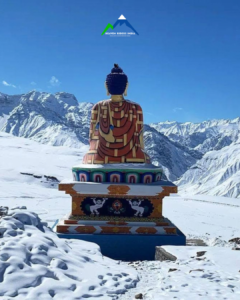
Langza is one of the most popular villages in Spiti Valley, known for its giant Buddha statue and fossil-rich surroundings.
The large Buddha statue overlooks the village, with beautiful Himalayan peaks forming the background. The area is also known for marine fossils that can be found in its sedimentary rocks.
During winter, Langza becomes a quiet snow-covered village where you can experience traditional Spitian homes and local life.
It is a wonderful place for photography, especially during clear weather when the surrounding mountains are visible.
Remember to respect the natural environment and avoid collecting fossils or disturbing protected areas.
5) Gue Village
Gue is a small village in the Spiti region, famous for its naturally preserved mummy of a Buddhist monk.
The mummy is believed to be several centuries old and is housed in a small structure in the village. It is one of the most unusual historical sights in the region.
Apart from the mummy, Gue offers a glimpse into traditional village life and the remote landscape of Spiti.
If you are interested in history, culture, and lesser-known places, Gue is worth considering. Check local accessibility before visiting during winter.
6) Chicham Bridge
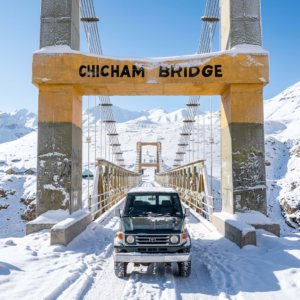
Chicham Bridge connects the villages of Chicham and Kibber across a deep gorge.
Standing above the gorge, the bridge offers impressive views of the surrounding mountains and rugged landscape. It is one of the most memorable stops for travellers exploring this part of Spiti.
During winter, the surrounding mountains often become covered in snow, making the views even more beautiful.
The bridge is also a popular photography spot. However, winter road conditions can be unpredictable, so visit only when the route is safe and accessible.
7) Komic Village
Komic is one of the highest inhabited villages in the world, located at an altitude of approximately 4,587 metres (15,050 ft) in Spiti Valley. Surrounded by barren mountains and vast Himalayan landscapes, this remote village offers a beautiful glimpse into traditional Spitian life.
The main attraction here is Tangyud Monastery, an ancient Buddhist monastery known for its traditional architecture and peaceful surroundings. The village also has traditional mud-brick houses and stunning mountain views.
During winter, Komic transforms into a snow-covered Himalayan village. The white landscape, quiet surroundings, and clear mountain views make it a wonderful destination for photography and experiencing local culture.
8)Tabo Monastery
Often called the Ajanta of the Himalayas, Tabo Monastery is among the oldest continuously functioning Buddhist monasteries in the Himalayan region.
Founded in 996 CE, it is known for its ancient murals, wall paintings, clay sculptures, and traditional architecture.
Unlike monasteries built on hilltops, Tabo Monastery sits on relatively flat ground. Its interiors offer a closer look at the Buddhist art and traditions that have been preserved for centuries.
Winter is a quieter time to explore the monastery and understand its history without the usual tourist crowds.
If you enjoy history and architecture, make sure to include Tabo in your Spiti itinerary.
9) Kibber Village
Kibber is one of the most famous high-altitude villages in Spiti Valley. It is known for its traditional houses, mountain scenery, and wildlife habitat.
Winter is particularly interesting here because the surrounding region becomes an important habitat for snow leopards. Wildlife enthusiasts and photographers visit the area hoping to spot this elusive animal.
Kibber is also a good place to experience local culture and see how people manage daily life during the harsh Himalayan winter.
Snow leopard sightings are never guaranteed. If you are interested in wildlife tracking, always go with experienced local guides and maintain a safe distance from animals.
10) Hikkim Village
Hikkim is famous for its post office, commonly recognised as one of the world’s highest post offices.
Located at a high altitude, the village offers beautiful views of the surrounding mountains and traditional Spitian homes.
During winter, the village becomes especially quiet, and snow adds a beautiful touch to its landscape.
Visiting Hikkim gives you an opportunity to experience the slower pace of life in Spiti and see how people live in remote Himalayan settlements.
Do remember that access to Hikkim can be affected by snowfall, so check road conditions before travelling.
Experiences You Should Not Miss in Spiti During Winter
A winter trip to Spiti is about much more than visiting famous places. Some of the best memories come from the experiences you have along the way.
Here are a few experiences worth adding to your winter itinerary.
1) Walking on Frozen Rivers
One of the most unusual winter experiences in the Himalayas is seeing rivers partially or completely frozen.
In certain parts of Spiti, frozen river stretches create incredible winter scenery. Walking on a frozen river may look exciting, but it can be dangerous because ice thickness and stability are difficult to judge.
Never attempt it without experienced local guidance and proper safety checks.
2) Snow Leopard Tracking
Spiti Valley is among India’s best-known regions for snow leopard tracking.
During winter, snow leopards may move to lower elevations in search of prey, making them easier to track in certain areas. Kibber and the surrounding wildlife habitat are particularly well known for sightings.
However, finding a snow leopard requires patience, suitable conditions, and sometimes several days of searching. Sightings are never guaranteed.
Always choose responsible wildlife guides who respect animal behaviour and maintain safe viewing distances.
3) Winter Photography
If you enjoy photography, winter Spiti offers plenty of opportunities.
You can capture:
- Snow-covered villages and traditional houses.
- Key and Tabo monasteries.
- Mountain roads surrounded by snow.
- Frozen streams and river landscapes.
- Local people and their everyday activities.
- Clear night skies filled with stars.
The soft morning light and golden evening sunlight can make the snow-covered mountains look particularly beautiful.
4) Experience Local Winter Festivals
Spiti has a rich Buddhist culture, and winter is a time when several local religious and cultural celebrations take place.
Losar, the Tibetan New Year, is one of the important celebrations in the region. Depending on the local calendar and village, you may experience traditional food, prayers, music, and cultural activities.
Festival dates vary each year, so check the local schedule before planning your visit around a particular celebration.
5) Stargazing Under Clear Himalayan Skies
Spiti is known for its clear skies and relatively low light pollution.
On suitable nights, you can enjoy beautiful views of the stars and constellations. If the weather is clear, the night sky can be an unforgettable part of your winter trip.
Carry warm clothing and a camera if you want to try night photography.
6) Enjoy Traditional Spitian Food
Winter is also a good time to experience local food and hospitality.
You can try traditional dishes such as Thukpa, Thenthuk, Momos, and local barley-based preparations. A warm bowl of soup or a cup of butter tea feels especially comforting after spending time outdoors in freezing temperatures.
Talking to local residents and learning about their daily routines can make your trip even more meaningful.
Best Time to Visit Spiti Valley in Winter
Winter in Spiti generally lasts from November to March. However, the experience changes throughout the season.
Month | What to Expect |
November | Cold weather begins, with occasional snowfall and changing road conditions. |
December | Snowfall becomes more common, and temperatures drop considerably. |
January | One of the coldest months, with frozen landscapes and challenging travel conditions. |
February | Good opportunities for winter scenery and snow leopard tracking. |
March | Temperatures gradually begin to rise, although snow and difficult road conditions may continue. |
For travellers looking for a proper snow experience, December to February is generally a good period to consider.
Keep in mind that snowfall is weather-dependent. Road accessibility can change from one day to another, especially on high-altitude routes.
Important Tips for Planning a Winter Spiti Trip
Winter travel in Spiti requires more preparation than a regular holiday. The weather, altitude, and road conditions can make the journey challenging.
Here are some important things to keep in mind.
- Acclimatise Properly
Spiti is located at a high altitude, and travelling directly to higher elevations can increase the risk of acute mountain sickness.
Give your body enough time to adjust to the altitude. Follow a gradual travel plan, avoid overexertion, and stay hydrated.
If you experience symptoms such as a persistent headache, nausea, dizziness, or breathlessness, seek medical advice. Severe symptoms require immediate descent and medical attention.
- Carry Proper Winter Clothing
Temperatures can fall well below freezing, particularly at night.
Carry suitable winter clothing, including:
- Thermal innerwear.
- Fleece jackets and insulated winter jackets.
- Waterproof and windproof outer layers.
- Warm trekking trousers.
- Woollen socks and insulated gloves.
- Woollen caps and neck warmers.
- Waterproof winter footwear.
- Sunglasses and sunscreen.
Layering your clothes will help you stay comfortable during outdoor activities.
- Choose the Right Vehicle
Winter roads in Spiti can be covered with snow and ice. A suitable 4×4 vehicle with an experienced mountain driver is recommended for challenging winter routes.
Avoid travelling through unfamiliar snow-covered roads without proper experience and equipment.
- Check Road and Weather Conditions
Road access in Spiti can change quickly due to snowfall, landslides, and extreme weather.
Check the latest local updates before travelling. Keep some flexibility in your itinerary because delays are possible during winter.
- Carry Essential Medicines and Supplies
Carry your personal medicines, a basic first-aid kit, and any prescribed medication.
It is also sensible to keep snacks, drinking water, power banks, and emergency supplies with you.
- Understand Permit Requirements
Indian travellers generally do not need an Inner Line Permit for the usual Spiti Valley tourist circuit.
Foreign nationals may require permits for certain restricted or protected areas, particularly around parts of the Indo-Tibet border. Check the latest government requirements before travelling.
- Respect Local Culture and Traditions
Spiti has a strong Buddhist cultural heritage. While visiting monasteries and villages, respect local customs and traditions.
Ask permission before photographing people, follow monastery rules, and avoid disturbing religious activities.
- Stay Connected With Your Family
Mobile network connectivity is limited in several parts of Spiti, especially in remote villages.
Inform your family or friends about your travel plans and expected route. Do not depend entirely on mobile internet for navigation or emergency communication.
Explore Spiti Valley With Heaven Riders India
Planning a winter trip to Spiti requires careful attention to transportation, accommodation, weather, and road conditions.
At Heaven Riders India, we organise winter expeditions for travellers who want to experience the beauty of the Himalayas with proper planning and local support.
Our Spiti Winter Expedition is designed around exploring the snow-covered landscapes and remote villages of Spiti in a 4×4 vehicle.
Here is what makes the expedition suitable for winter travellers:
- Experienced local mountain drivers.
- 4×4 vehicles for challenging winter routes.
- Small-group travel experiences.
- Carefully planned accommodation and meals.
- Local guidance and travel support.
- Attention to acclimatisation and high-altitude safety.
Whether you are travelling solo, with friends, or looking for a group adventure, we can help you plan your winter journey.
Planning your winter adventure?
Explore our Spiti Winter Expedition or visit Heaven Riders India to know more about our Himalayan travel experiences.
Frequently Asked Questions About Visiting Spiti in Winter
- Is Spiti Valley worth visiting in winter?
Yes. Spiti offers a completely different experience during winter, with snow-covered villages, frozen landscapes, ancient monasteries, and opportunities for wildlife tracking. However, it is important to be prepared for extreme cold and difficult road conditions.
- Which month is best for a winter Spiti trip?
December, January, and February are popular months for experiencing winter in Spiti. January and February are particularly cold, and snowfall can affect travel plans.
- How cold does Spiti get in winter?
Temperatures can drop to around -20°C or lower in some areas, especially at night. Actual temperatures depend on the location and weather conditions.
- Can we visit Spiti Valley in a normal car during winter?
A normal car is not recommended for challenging snow-covered roads. A suitable 4×4 vehicle with an experienced mountain driver is a safer option for winter travel.
- Can we see snow leopards in Spiti during winter?
Winter is a good season for snow leopard tracking in areas around Kibber. However, sightings are not guaranteed and may require several days of searching with experienced local guides.
Final Thoughts
Spiti Valley in winter is an experience that stays with you long after the journey ends. From the snow-covered streets of Kaza to the ancient walls of Key Monastery, every stop offers a different view of life in the high Himalayas.
You can spend your days exploring remote villages, learning about Buddhist traditions, enjoying local food, photographing snowy mountains, or joining a guided snow leopard tracking experience.
The journey can be demanding, and the cold is something you should never underestimate. But with proper preparation, suitable transport, and a flexible itinerary, winter Spiti can become one of your most memorable mountain adventures.
If you are planning to experience the Himalayas in their winter form, explore the Spiti Winter Expedition by Heaven Riders India and start planning your next adventure.